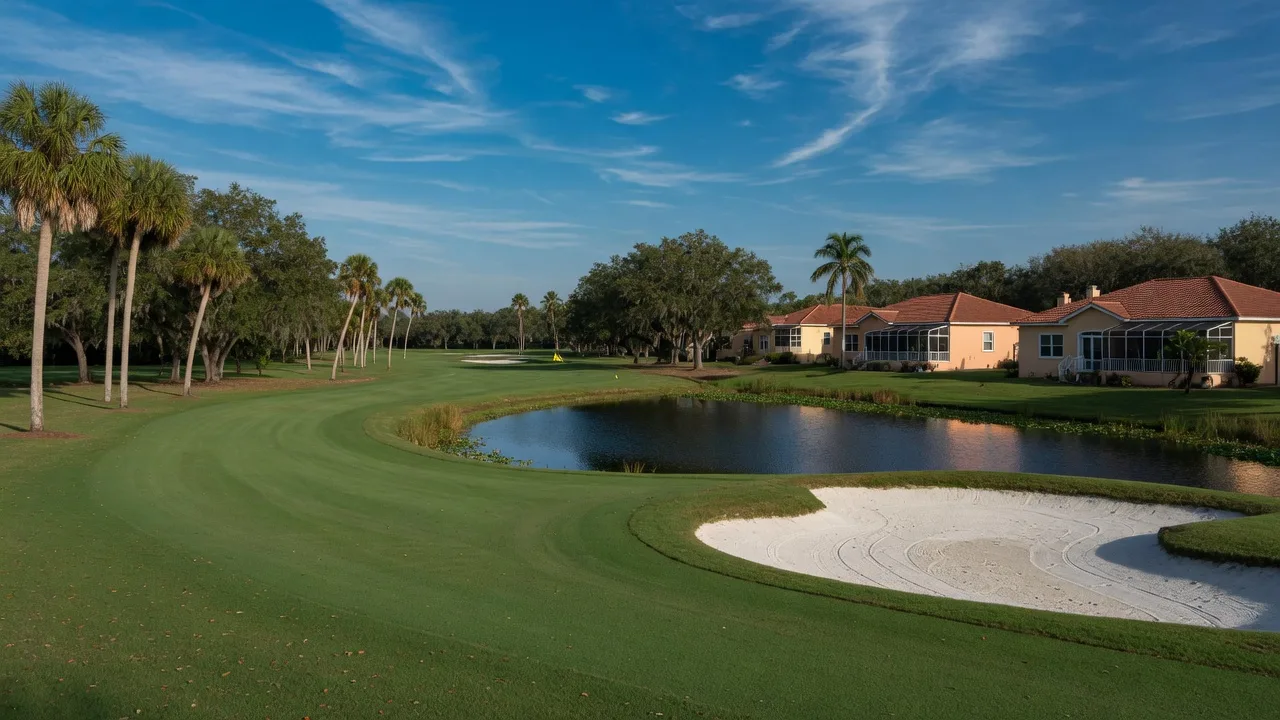
Golf is one of the main reasons people move to Florida's Gulf Coast, and a home in a golf community is how many of them combine lifestyle with real estate. But the way golf is structured here varies more than most buyers expect: public courses, private clubs, and bundled communities all work differently, and the cost differences are real. This guide covers how golf membership works across Bradenton, Lakewood Ranch, and Manatee County, and the questions to ask before you buy.
There are really three ways to play
Start by sorting the options into three buckets, because each comes with a different commitment. Public daily-fee courses are open to anyone who pays per round: Buffalo Creek Golf Course in Palmetto, Manatee County Golf Course, and Heritage Harbour Golf Club at River Strand all work this way. Semi-private clubs like University Park Country Club and Waterlefe Golf & River Club offer public tee times but also sell memberships. Private clubs, including Bradenton Country Club, Sara Bay Country Club, and The Concession, require membership to play. The label "golf community" on a listing tells you almost nothing until you know which bucket it falls in.
The membership model matters more than the course
Inside the private and semi-private world, the big fork is equity versus non-equity membership. An equity membership makes you a part-owner of the club: you buy a share, you get voting rights on the board, and your initiation can be refundable when you leave, subject to the bylaws. In exchange, you may face special assessments for capital projects, and the upfront cost is higher. A non-equity membership is closer to a subscription: the club is owned by a developer, corporation, or management company, so there is no ownership and no vote, the initiation is typically non-refundable, dues are more predictable, and it is easier to resign. Neither is better. The right choice depends on how long you plan to stay and how much control you want.
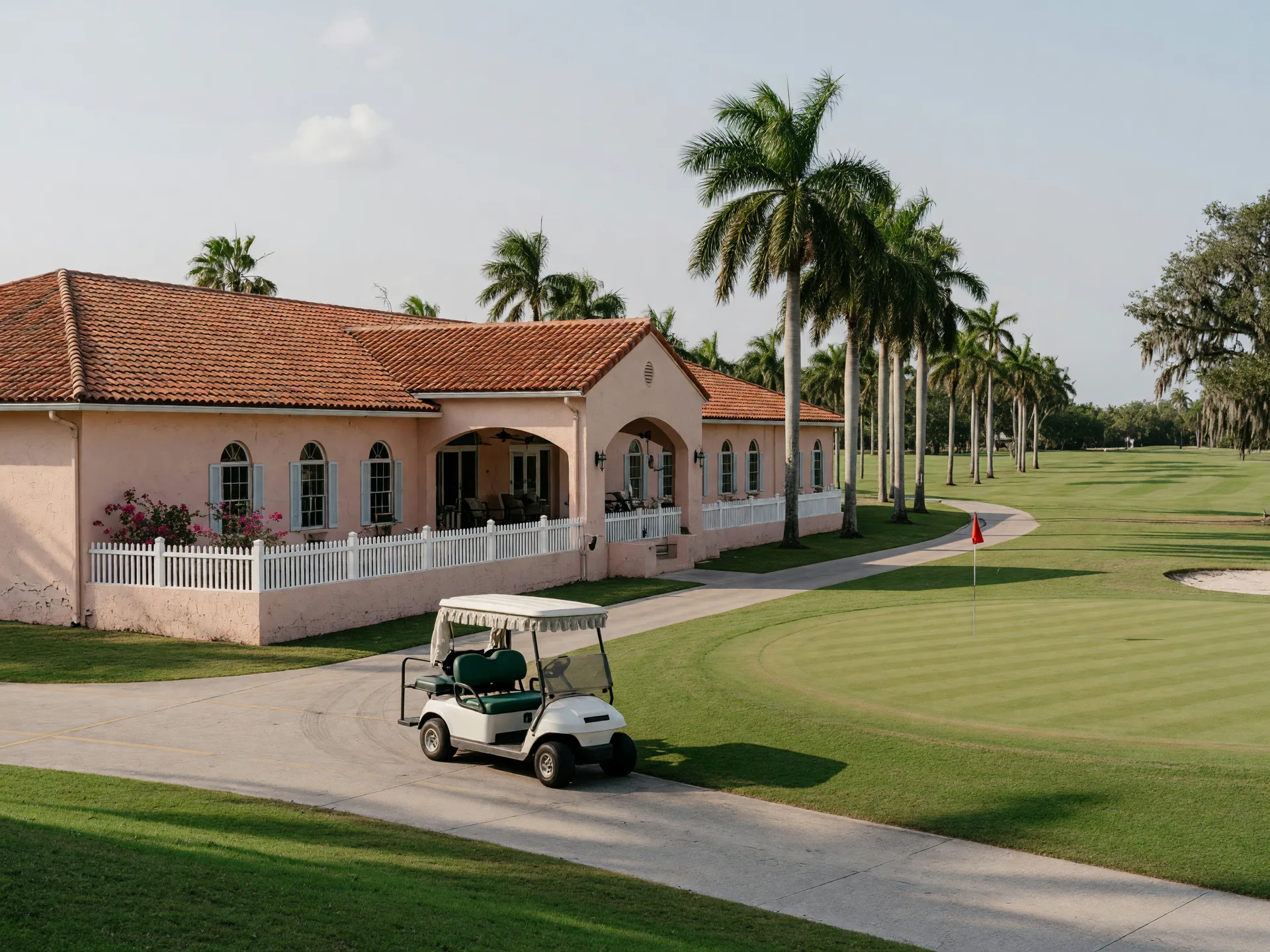
A country club clubhouse overlooking a putting green and a palm-lined fairway, the social center of a golf community.
Bundled communities are changing the math
The most interesting shift on the Gulf Coast is the bundled community. Newer Lakewood Ranch neighborhoods such as Lakewood National and Esplanade tie golf directly to homeownership: instead of a large initiation, residents pay a modest annual fee, commonly in the range of roughly $4,000 to $7,000 a year. Compare that with the flagship Lakewood Ranch Golf & Country Club, which spans about 72 holes across four courses and has reported Premier Golf initiations around $110,000. That spread is exactly why you cannot price a golf community by its name alone.
The questions to ask before you buy
Before you make an offer in a golf community, run through this list. Is the golf membership mandatory or optional, and is it included in the HOA? Who owns the course: the members, a developer, or a management company, and what happens to your membership if ownership changes? What is the all-in monthly number once you add HOA, golf dues, and any possible assessments? If the course is public, do residents get priority tee times? Can the membership be sold or transferred when you resell the home? And finally, the honest one: how many rounds do you really play each year? For a golfer who plays a handful of times, a public course can make more sense than a private club.
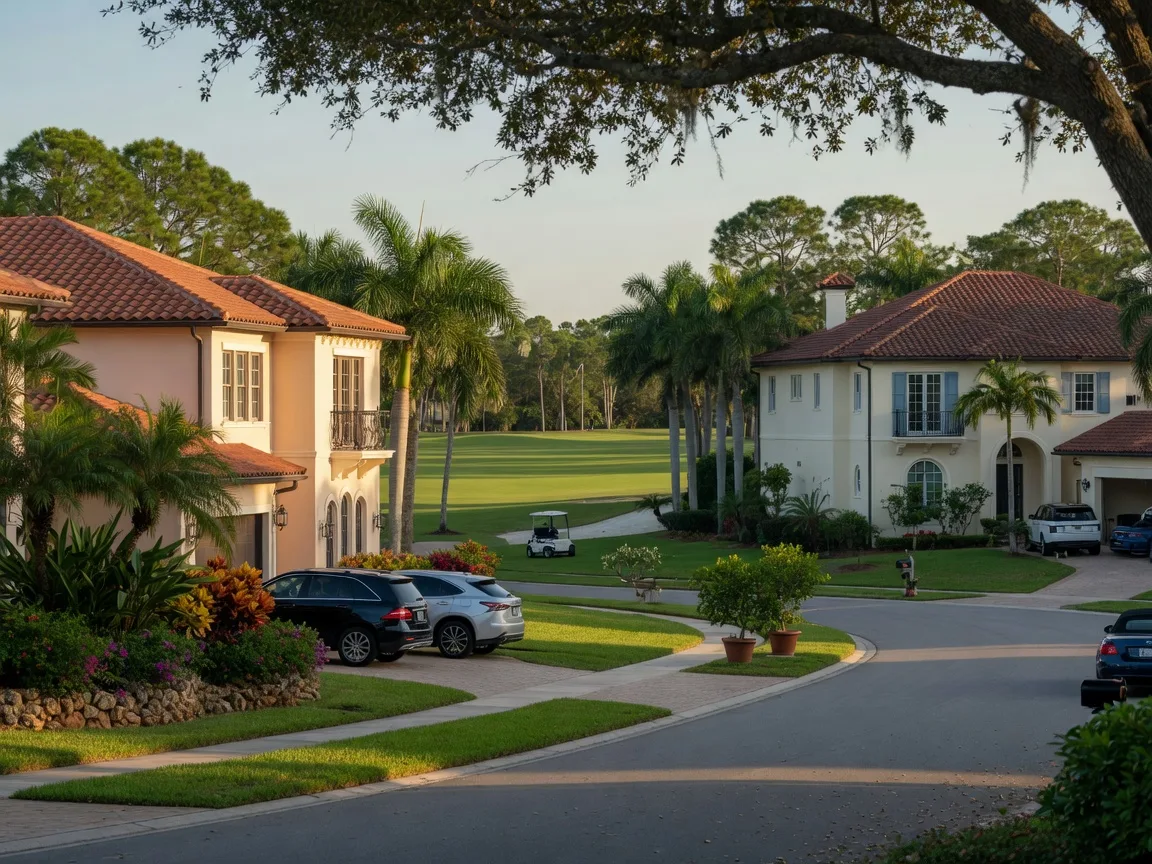
Homes along a tree-lined street in a Gulf Coast golf community, with the fairway visible between the houses.
The lifestyle part
Golf is playable year-round here, which changes the math for many buyers: a membership you use every week looks different from one you use a few times a year. Beyond the rounds, there is the lifestyle that comes with it, mornings on the course, neighbors on the cart path, and a community built around an outdoor rhythm worth weighing as much as the fee structure.
I work with buyers across Manatee and Sarasota counties who are weighing golf communities, and the membership details are where good deals are found and missed. If you are comparing options, the golf communities guide is a good starting point, or reach out directly.
If you had to choose, would you rather join a private club with a significant initiation and real ownership, or a bundled community where golf is built into a predictable annual fee?
Tell me which one and why. Your answer tells me which type of golf community to focus on for you, and I will give you my honest take on the trade-offs.

Roger Reed
Realtor, RAR Property Group | eXp Realty
I help buyers, sellers, and investors throughout Florida's Gulf Coast make smarter real estate decisions. Licensed in Florida: SL 3407667.
Get in touchWant the full picture on golf communities, from mandatory memberships to the real monthly cost?
Send me a message or grab a quick call. I can help you compare communities and understand what each membership actually costs before you commit.
Roger Reed · 941-402-0083 · roger@rarpropertygroup.com